Beginner’s Guide to Collecting Matchbox
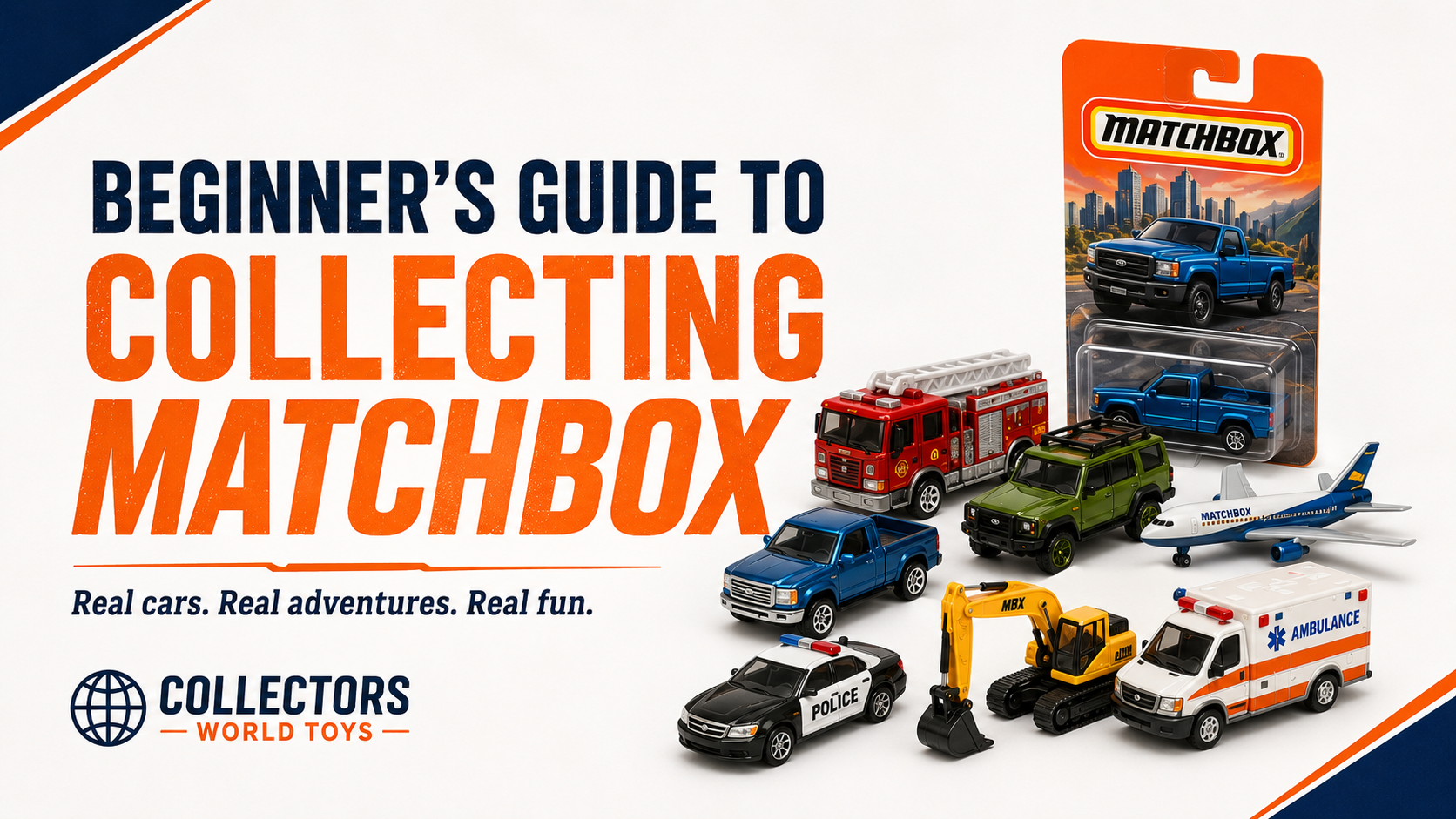
Collecting Matchbox cars is an enjoyable and affordable way to explore the world of diecast vehicles. Matchbox is especially popular with collectors who appreciate realistic cars, trucks, construction equipment, emergency vehicles, utility vehicles, and everyday automobiles.
A Matchbox collection can be as simple as a few favorite cars displayed on a shelf or as detailed as a carefully organized archive of castings, colors, packaging variations, and release years. There is no single correct way to collect. The best approach is to focus on the vehicles and themes that interest you most.
This beginner’s guide explains how to start collecting Matchbox, understand the different product lines, recognize packaging details, organize your collection, shop wisely, and avoid common mistakes.
What Are Matchbox Cars?
Matchbox produces small diecast vehicles based on real automobiles, commercial trucks, emergency vehicles, construction equipment, and transportation machines.
Although Matchbox and Hot Wheels are both owned by Mattel, the two brands often have different design personalities. Hot Wheels frequently emphasizes speed, racing, customized vehicles, and fantasy designs, while Matchbox commonly focuses on realistic vehicles that might be seen on streets, job sites, farms, airports, or emergency scenes.
Matchbox vehicles may include:
-
Passenger cars
-
Pickup trucks
-
SUVs
-
Vans
-
Police vehicles
-
Fire engines
-
Ambulances
-
Construction equipment
-
Farm vehicles
-
Buses
-
Taxis
-
Utility trucks
-
Off-road vehicles
-
Classic automobiles
-
Electric vehicles
-
Aircraft and watercraft
This variety makes Matchbox appealing to collectors who enjoy realistic transportation and everyday working vehicles.
Choose a Collecting Focus
Trying to collect every Matchbox vehicle can quickly become overwhelming. A focused collection is easier to organize, display, and budget for.
Popular Matchbox collecting themes include the following.
Favorite Vehicle Manufacturers
You may decide to collect vehicles from a favorite manufacturer, such as:
-
Ford
-
Chevrolet
-
Dodge
-
Jeep
-
Toyota
-
Honda
-
Nissan
-
Volkswagen
-
Porsche
-
Mercedes-Benz
-
Land Rover
-
Tesla
This approach creates a collection with a consistent automotive theme.
Emergency Vehicles
Matchbox has a long tradition of producing police cars, fire engines, rescue trucks, ambulances, and other emergency vehicles.
Collectors can build displays based on:
-
Police departments
-
Fire and rescue services
-
Airport emergency vehicles
-
Search-and-rescue vehicles
-
Medical transportation
-
International emergency designs
Emergency vehicles are especially appealing for miniature city layouts and dioramas.
Construction and Working Vehicles
Bulldozers, excavators, dump trucks, tractors, utility vehicles, and service trucks are a major part of Matchbox collecting.
These models often feature moving parts, working beds, rotating equipment, or realistic occupational graphics.
Classic Cars
Collectors interested in automotive history may focus on classic sedans, sports cars, station wagons, convertibles, and pickup trucks.
Classic Matchbox vehicles can create an attractive display representing different eras of automobile design.
Modern Everyday Vehicles
One of Matchbox’s strengths is producing cars that are not always represented by other diecast brands.
Collectors may find models based on:
-
Family SUVs
-
Delivery vans
-
Compact cars
-
Electric vehicles
-
Work trucks
-
Utility vehicles
-
Public transportation
These ordinary vehicles can be just as interesting as exotic sports cars because they reflect what people actually drive and use.
Off-Road and Adventure Vehicles
Jeep, Land Rover, Ford Bronco, Toyota, and other off-road models are popular among collectors.
An off-road collection can include:
-
Trail vehicles
-
Expedition trucks
-
Camping vehicles
-
Rock crawlers
-
Desert racers
-
Rescue vehicles
-
Adventure-themed releases
A Single Casting
Some collectors choose one particular casting and search for every color, package, and variation.
This can be a rewarding challenge, especially when a vehicle has been released repeatedly over many years.
Understanding Matchbox Mainline Cars
Mainline Matchbox vehicles are the standard releases commonly found in retail stores. They are generally affordable and are often packaged individually on blister cards.
Mainline assortments may contain a mixture of:
-
New castings
-
Returning castings
-
New colors
-
Updated graphics
-
Licensed vehicles
-
Working vehicles
-
Emergency vehicles
-
Construction equipment
The packaging usually identifies the vehicle name and may include a number showing its place within the annual assortment.
A higher number does not necessarily mean a vehicle is rarer or more valuable. The number is primarily used to identify and organize the release.
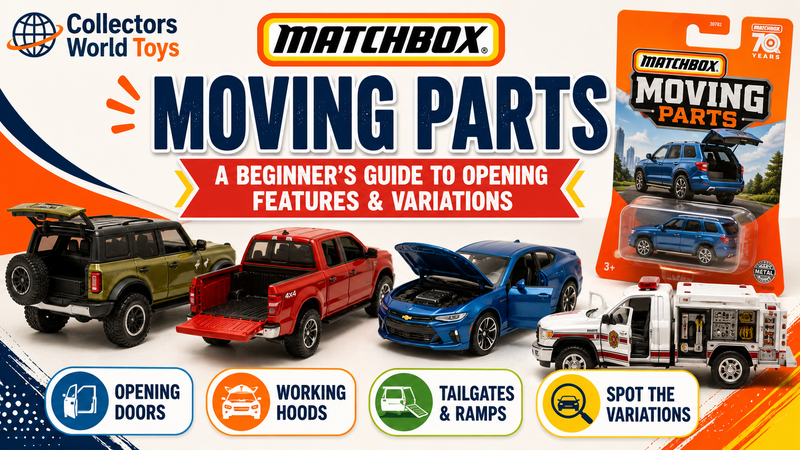
Matchbox Moving Parts
Matchbox Moving Parts vehicles include one or more functional features.
Depending on the casting, these may include:
-
Opening doors
-
Opening hoods
-
Opening trunks
-
Moving truck beds
-
Folding ramps
-
Rotating equipment
-
Opening rear panels
Moving Parts releases usually cost more than standard mainline cars because of their additional construction and detail.
Collectors who enjoy interacting with their vehicles may find this series especially appealing.
Matchbox Collectors Series
The Matchbox Collectors line is designed for collectors looking for additional detail and upgraded presentation.
These models may feature:
-
More detailed paint
-
Premium-style wheels
-
Rubber tires
-
Special packaging
-
Opening parts
-
Realistic manufacturer colors
-
Collector-focused decoration
Availability and assortment names can vary, so always inspect the package carefully when identifying a specific release.
Matchbox Multi-Packs
Matchbox vehicles are also sold in multi-packs containing several cars.
Multi-packs may include:
-
Vehicles also sold individually
-
Exclusive colors
-
Unique graphics
-
Models not currently available as single releases
Collectors should not assume every multi-pack vehicle is exclusive. Compare the exact color, wheels, and graphics with individual releases before paying a premium.
Matchbox Sky Busters and Other Vehicle Types
Matchbox is not limited to cars and trucks.
Some assortments include:
-
Airplanes
-
Helicopters
-
Boats
-
Military-style aircraft
-
Rescue aircraft
-
Commercial aviation vehicles
These releases can complement an airport, harbor, emergency, or transportation-themed collection.
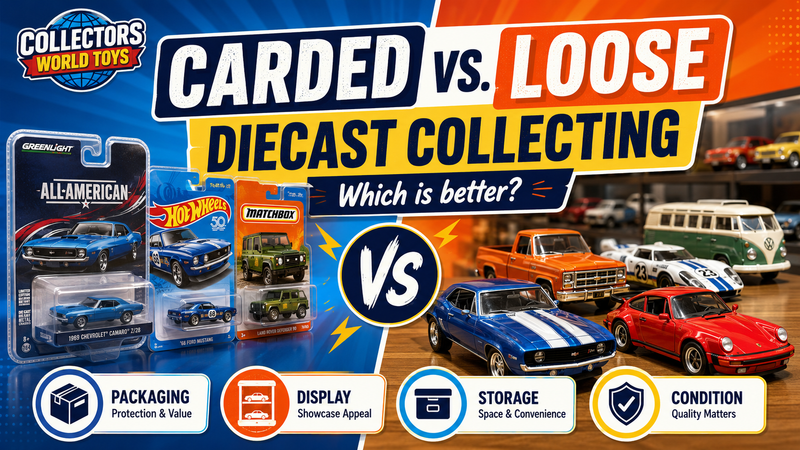
Carded Versus Loose Matchbox Collecting
New collectors often wonder whether Matchbox cars should remain sealed.
Both approaches are valid.
Keeping Matchbox Cars Carded
Carded vehicles remain sealed inside their original blister packaging.
Advantages include:
-
The package identifies the exact release
-
The vehicle is protected from handling
-
Card artwork remains part of the collectible
-
Complete series can look attractive when displayed together
-
Packaging variations can be collected
Disadvantages include:
-
Carded vehicles require more storage space
-
Cards and blisters can become damaged
-
The vehicle cannot be examined closely
-
Large collections can be difficult to display
Opening Matchbox Cars
Loose Matchbox vehicles are removed from their packaging.
Advantages include:
-
Details are easier to inspect
-
Moving parts can be used
-
Loose cars require less storage space
-
Vehicles can be photographed and displayed in dioramas
-
You can appreciate the vehicle from every angle
Disadvantages include:
-
Paint may become scratched
-
Small parts can be damaged
-
Identifying the exact release may become harder
-
The original package is lost
Many collectors keep selected favorites carded while opening others for display.
What Do the Numbers on Matchbox Packages Mean?
A number on the front of a Matchbox package usually identifies the vehicle’s position within an assortment or annual series.
For example, a vehicle marked 35/100 would generally represent the thirty-fifth model in a one-hundred-vehicle assortment.
These numbers are helpful when attempting to complete a set, but they do not automatically indicate rarity.
You may also find production codes, toy numbers, copyright dates, and manufacturing information on the package or vehicle base. These details can help identify variations.
Copyright Date Versus Release Year
The copyright date molded into the bottom of a Matchbox vehicle often relates to the casting’s design or tooling. It does not always represent the year that a particular color variation was released.
A casting designed several years earlier may continue to appear in new colors and series.
To identify a specific release, compare:
-
Vehicle color
-
Graphics
-
Wheel design
-
Interior color
-
Window color
-
Base material
-
Package design
-
Series name
-
Assortment number
Do not rely only on the molded copyright date.
Where to Buy Matchbox Cars
Matchbox vehicles can be found through many retail and secondary-market sources.
Common places to shop include:
-
Department stores
-
Grocery stores
-
Drugstores
-
Dollar stores
-
Toy stores
-
Diecast specialty shops
-
Online retailers
-
Online marketplaces
-
Flea markets
-
Antique malls
-
Garage sales
-
Toy shows
-
Collector conventions
-
Local collecting groups
Retail stores are useful for finding current releases. Online sellers, toy shows, and specialty stores are often better sources for discontinued or older Matchbox vehicles.
Inspect the Vehicle and Package Before Buying
Condition can be important, particularly for older or collectible releases.
When buying a carded Matchbox vehicle, inspect:
-
Card corners
-
Card edges
-
Hanger tab
-
Blister clarity
-
Cracks in the blister
-
Blister separation
-
Creases
-
Water damage
-
Price stickers
-
Surface scratches
When buying a loose vehicle, inspect:
-
Paint chips
-
Bent axles
-
Damaged wheels
-
Cracked windows
-
Missing parts
-
Broken opening features
-
Rust
-
Corrosion
-
Marker or glue residue
A moving part should be opened carefully. Do not force a door, hood, ramp, or truck bed that appears stuck.
How to Identify a Matchbox Vehicle
The base of a Matchbox vehicle often contains useful information, including the model name or manufacturer.
Start by checking:
-
Vehicle name
-
Brand or manufacturer
-
Copyright date
-
Country of manufacture
-
Production markings
-
Base material
-
Toy or casting number
Then compare the vehicle’s color, wheels, windows, interior, and graphics with collector references or completed marketplace listings.
Useful information to record includes:
-
Casting name
-
Manufacturer
-
Model
-
Release year
-
Series
-
Color
-
Wheel type
-
Interior color
-
Window color
-
Base color
-
Packaging style
-
Condition
-
Purchase price
Learn About Wheel Variations
The same Matchbox casting may appear with different wheel designs.
A wheel variation can result from:
-
Production changes
-
Factory supply differences
-
Regional releases
-
Multi-pack exclusives
-
Series updates
-
Intentional design changes
Not every wheel variation is rare. Some are common production differences.
When researching a variation, compare multiple reliable examples and look at completed sales rather than unusually high asking prices.
Errors and Factory Variations
Matchbox manufacturing errors may include:
-
Missing wheels
-
Incorrect wheels
-
Misaligned graphics
-
Missing paint
-
Incorrectly assembled parts
-
Vehicle packaged on the wrong card
-
Loose components inside the blister
Some collectors enjoy factory errors, but an error is not automatically valuable.
Value depends on collector interest, how noticeable the error is, whether it appears authentic, and how often similar examples are found.
Avoid paying a large premium simply because a seller describes an item as rare.
Asking Price Is Not the Same as Value
Online listings may show Matchbox cars offered at extremely high prices. An asking price does not prove that a vehicle is worth that amount.
To estimate market value, look for recent completed or sold transactions involving the exact same release.
Compare:
-
Casting
-
Color
-
Wheels
-
Packaging
-
Condition
-
Series
-
Regional variation
-
Opening features
-
Included accessories
A rare variation in excellent condition may sell for more than a common release, but demand is just as important as age.
Are Older Matchbox Cars Valuable?
Some older Matchbox vehicles can be valuable, especially when they are scarce, desirable, complete, and in excellent condition.
Value may be affected by:
-
Age
-
Rarity
-
Casting popularity
-
Color variation
-
Wheel type
-
Condition
-
Original box or package
-
Missing parts
-
Collector demand
-
Regional availability
An old Matchbox vehicle is not automatically valuable. Many older models were produced in large numbers and remain affordable.
Original boxes can add collector appeal, particularly when both the vehicle and box are in good condition.
Set a Collecting Budget
Matchbox cars are usually inexpensive individually, but frequent purchases can add up quickly.
A collecting budget can include:
-
Monthly spending limit
-
Amount reserved for premium releases
-
Amount reserved for older vehicles
-
Shipping costs
-
Storage supplies
-
Display cases
-
Toy-show admission
-
Protective packaging
Tracking purchases helps prevent overspending and makes it easier to understand the true cost of the collection.
Organize Your Collection Early
Begin organizing your Matchbox collection before it becomes too large.
Possible categories include:
-
Manufacturer
-
Vehicle type
-
Release year
-
Series
-
Casting
-
Color
-
Emergency service
-
Construction vehicle
-
Carded or loose
-
Mainline or premium
A spreadsheet or inventory application can include:
-
Vehicle name
-
Series
-
Release year
-
Color
-
Quantity
-
Condition
-
Purchase price
-
Storage location
-
Notes
Photographs are also useful, especially when shopping online or attending toy shows.
Storage for Carded Matchbox Cars
Store carded vehicles in a clean, dry area away from direct sunlight.
Possible storage methods include:
-
Plastic bins
-
Card protectors
-
Display rails
-
Pegboard hooks
-
Shelving
-
Acrylic display cases
Avoid overfilling containers. Pressure can bend the cards, crush blisters, and damage hanger tabs.
Temperature and humidity should remain as stable as possible.
Storage for Loose Matchbox Cars
Loose vehicles can be stored in:
-
Compartment cases
-
Thread-organizer boxes
-
Individual protectors
-
Display cabinets
-
Acrylic cases
-
Wall-mounted shelves
-
Custom dioramas
Use separate compartments when paint condition matters. Vehicles rubbing against each other may develop scratches and chipped edges.
Models with mirrors, ladders, cranes, opening doors, or other delicate parts require additional space.
Protect Cars From Sunlight and Moisture
Direct sunlight can fade paint, packaging, and printed graphics.
Moisture can cause:
-
Rust
-
Corrosion
-
Card warping
-
Mold
-
Blister separation
-
Damage to decals
-
Cloudy windows
Avoid storing collectibles in damp basements, hot attics, garages, or outdoor buildings without climate control.
Building Matchbox Dioramas
Matchbox cars work especially well in realistic miniature displays.
Possible diorama themes include:
-
City streets
-
Construction sites
-
Fire stations
-
Police scenes
-
Airports
-
Farms
-
Service garages
-
Parking lots
-
Off-road trails
-
Delivery centers
-
Harbors
Loose vehicles, road pieces, miniature buildings, figures, and signs can create detailed scenes.
A diorama does not need to be large or expensive. Even a small shelf can represent a realistic street or work site.
Join the Matchbox Collector Community
Collector communities can help beginners learn faster.
Local clubs, online groups, forums, toy shows, and social media communities can be useful for:
-
Identifying vehicles
-
Learning about new releases
-
Finding older models
-
Trading duplicates
-
Comparing variations
-
Sharing displays
-
Researching values
When buying or trading, clearly describe the condition of the vehicle and package.
Common Beginner Mistakes
Trying to Collect Everything
Matchbox has produced a large variety of vehicles. Attempting to collect every release can become expensive and frustrating.
Choose a manageable focus.
Overpaying for Common Cars
A vehicle may be described as rare even when many examples are available.
Check completed sales before making an expensive purchase.
Confusing the Copyright Date With the Release Year
The date on the base often relates to the casting design rather than the specific version.
Use the package, color, wheels, and graphics to identify the release.
Ignoring Package Condition
Bent cards, cracked blisters, and damaged hanger tabs may reduce collector appeal.
Forcing Moving Parts
Opening parts can become stiff. Forcing them may break hinges or damage paint.
Buying Only for Future Profit
Most Matchbox vehicles are mass-produced collectibles.
Some may increase in value, but future prices are difficult to predict. Collect vehicles you would enjoy even if their resale value remains low.
Failing to Track Duplicates
Without an inventory, it is easy to purchase the same variation more than once.
Should Matchbox Cars Be Collected as an Investment?
Certain Matchbox vehicles can become valuable, particularly older models, scarce variations, limited releases, and desirable vehicles in excellent condition.
However, collecting solely for investment involves risk.
Future value depends on:
-
Collector demand
-
Rarity
-
Condition
-
Authenticity
-
Packaging
-
Market trends
-
Availability
-
Casting popularity
The safest approach is to collect vehicles that you genuinely enjoy.
A Simple Matchbox Starter Plan
A beginner can use this step-by-step approach:
-
Choose two or three collecting themes.
-
Set a monthly budget.
-
Decide whether to collect carded vehicles, loose vehicles, or both.
-
Purchase a small number of favorites.
-
Record each new addition.
-
Research before buying expensive models.
-
Create a safe storage area.
-
Inspect moving parts carefully.
-
Trade or sell unwanted duplicates.
-
Allow your collecting focus to develop naturally.
Final Thoughts
Matchbox collecting offers something for almost every type of vehicle enthusiast. The brand’s focus on realistic transportation, working vehicles, emergency equipment, and everyday automobiles gives it a distinctive place in the diecast hobby.
Start with the vehicles that catch your attention. Build slowly, research unfamiliar releases, protect your collection, and avoid purchasing cars only because someone describes them as rare.
A meaningful Matchbox collection does not have to be large or expensive. It simply needs to reflect the vehicles, designs, and themes that you enjoy.